

Natan Linder opened the conference, followed by customer stories from Kerry Group, Roquette, Saint-Gobain Aerospace, Tiffany & Co. and more.
The second day featured workshops on enterprise architecture, AI agents, Centre of Excellence governance and GMP validation, a live app build, and the Partner Pavilion.


Fueled by


3 – 4 November 2026

Matmut Stadium Lyon Gerland, 353 Av. Jean Jaurès, 69007 Lyon, France
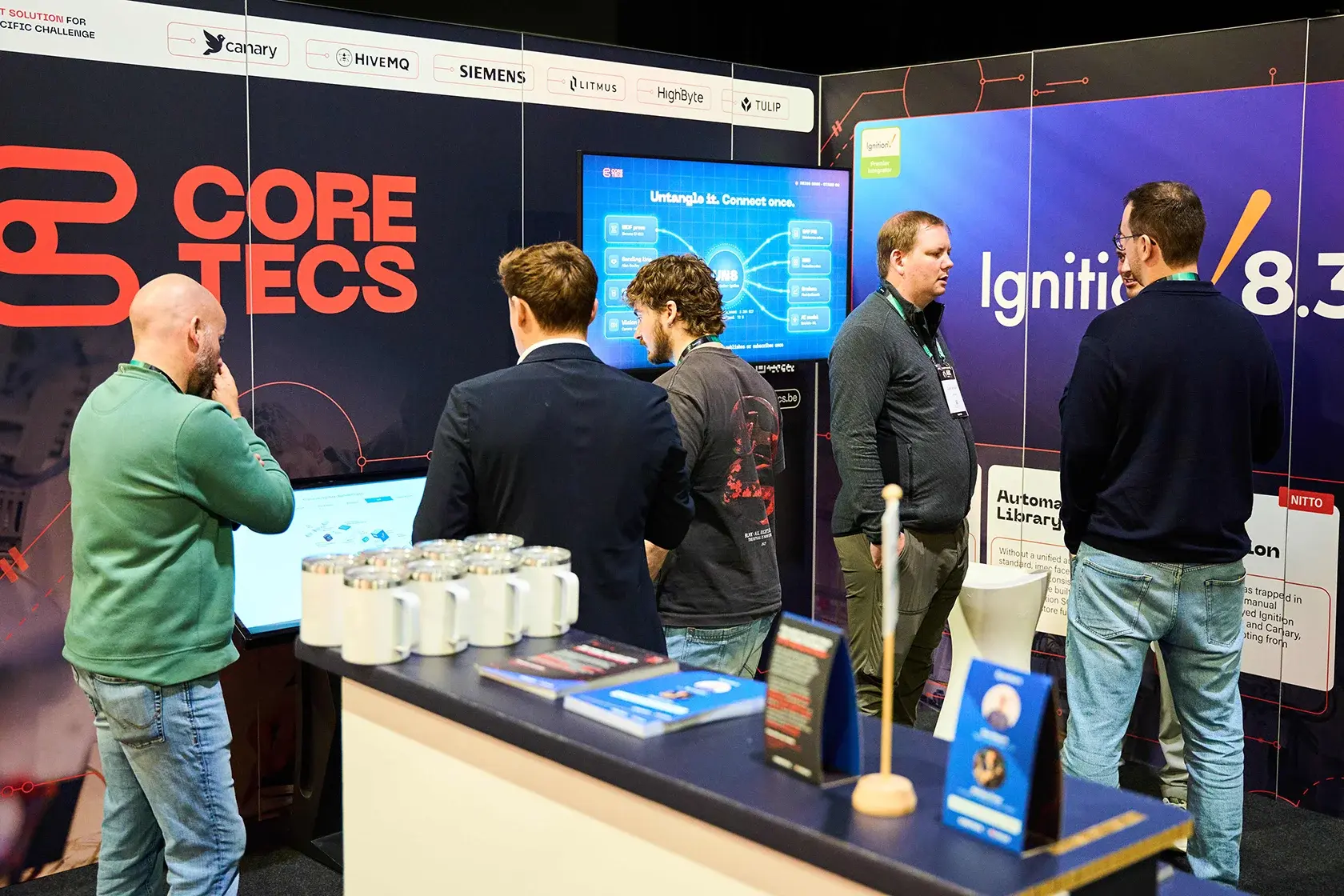
As an integrator and Tulip partner, it’s important for us to see firsthand where frontline operations and composable architectures are heading.
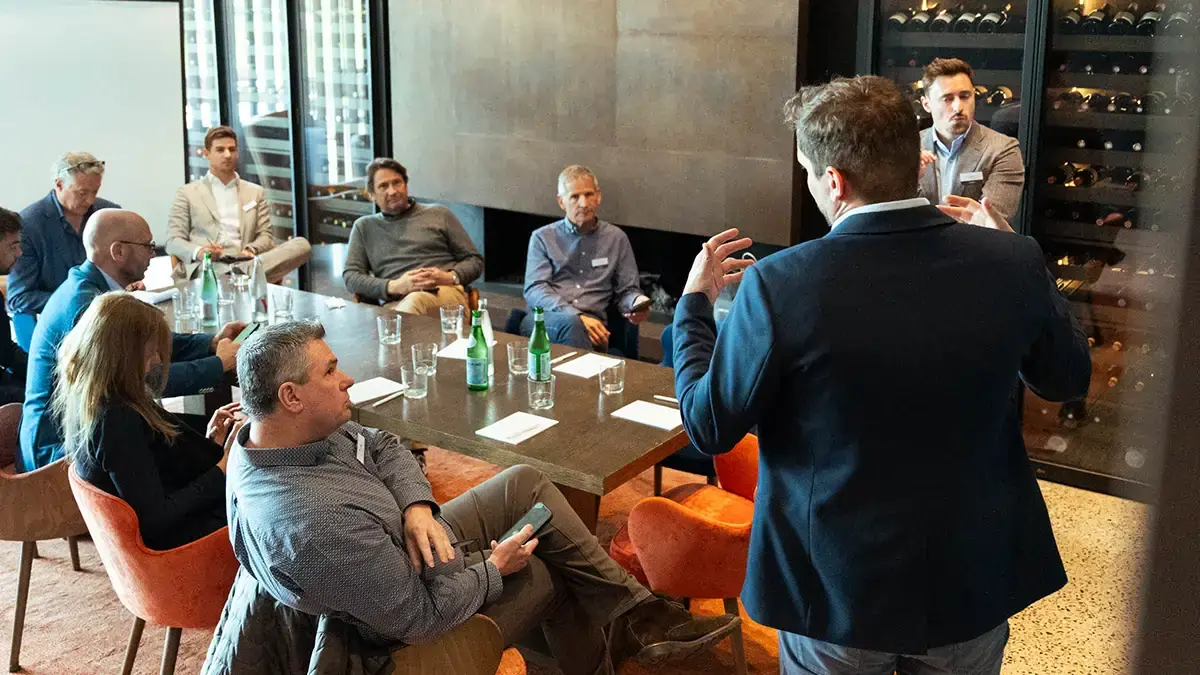
Over two days (3–4 November), Tulip brought together operations and digital leaders from manufacturers like Kerry Group, Roquette, Saint-Gobain Aerospace, DMG MORI, and Tiffany & Co., alongside Tulip CEO and co-founder Natan Linder. Day one focused on customer stories, while day two mostly consisted of workshops on enterprise architecture, AI agents, governance, and GMP validation.
Besides catching up with the European Tulip community, we got a good look at several use cases and upcoming platform updates. Here are the three main takeaways that stood out to us.
AI helps developers write code much faster, so people have started wondering whether no-code platforms still make sense. Tulip’s answer is simple: don’t fight custom code, bring it inside the platform. With the new SDK, developers can build custom apps in Git and run them directly inside Tulip.
To the operator, it looks and feels like any standard Tulip app. Under the hood, it still writes to standard Tulip tables with the same user access and audit trails. You get the flexibility of custom code without the maintenance and chaos of shadow IT. Definitely an approach we’ll keep a close eye on.
The traditional MES model with one big monolith was already on its way out, and in Lyon it became clear that composable architectures are taking over. We were especially impressed by the Kerry Group talk, where they shared how they replaced an end-of-life legacy MES with composable apps.
Their migration was far from ideal: they had a strict deadline and needed to switch everything over at once. Even under those constraints, they completed the migration at 1/3 of the cost and in 1/4 of the time of a traditional replacement project. It’s a clear example of how building only what your shop floor actually needs pays off.
Building an application is easier than ever. When spinning up an app takes twenty minutes, however, governance quickly becomes the real problem. As teams experiment more with AI-assisted app creation, keeping track of what runs on the shop floor is critical.
With Tulip’s upcoming Enterprise Library feature, central teams can review and distribute plant-floor apps across multiple sites. This helps maintain a clear overview and avoids those shadow IT issues we mentioned earlier.
A Tulip app is only as good as the data it runs on and the systems it talks to. That's where most composable MES projects get stuck, and that's where we come in.
As certified Tulip developers and IT/OT integrators, we connect Tulip to your machines, historian, ERP, and the rest of your architecture through a Unified Namespace (UNS). Operator data flows up into the UNS, and contextualised data flows back down into your Tulip apps.
We’re currently building a composable MES on Tulip for a materials manufacturer in Belgium, on top of the Unified Namespace we designed with them. The same UNS approach is already running across six plants in three countries.
Tulip is one of our preferred platforms, alongside Ignition, Canary, and HiveMQ. We’ll tell you where Tulip shines, where something else fits better, and how they work together.
A composable MES only works if your frontline teams use it, and ideally build on it. We train and coach citizen developers so your own people keep improving their apps long after go-live.
Our clients run plants all over Europe, so we stay flexible. Architecture, development, and support are delivered remotely by default, and we’re on-site when it really adds value.
During Operations Calling, Tulip announced plenty of updates around AI agents, contextualisation, and shop-floor connectivity. Want to see the new capabilities in a beta demo or talk through your composable MES roadmap? Reach out to our team.