

We implemented a comprehensive smart energy management system.

We will integrate a BESS to stabilise the grid and increase energy flexibility.
We paved the way for future sustainability initiatives like electrifying their fleet.

As a global leader in ecological transformation, Veolia set a clear company-wide target: reduce energy consumption by 5% while generating 5% more green energy. We helped them realise (a part of) that vision at their site in Genk, Belgium. Veolia needed a smart system that connects their solar installation to battery storage and manages these assets efficiently, maximising both sustainability and grid stability from day one.


Veolia’s Genk site received a significant sustainability boost. Their new smart energy management system provides complete control over local energy production and consumption. This allows them to cut energy costs by optimising their solar power, participate in the energy flexibility market, and contribute to national grid stability. Most importantly, the system provides a future-proof foundation for upcoming sustainability initiatives, including the large-scale electrification of their vehicle fleet.

We partnered with
Fueled by



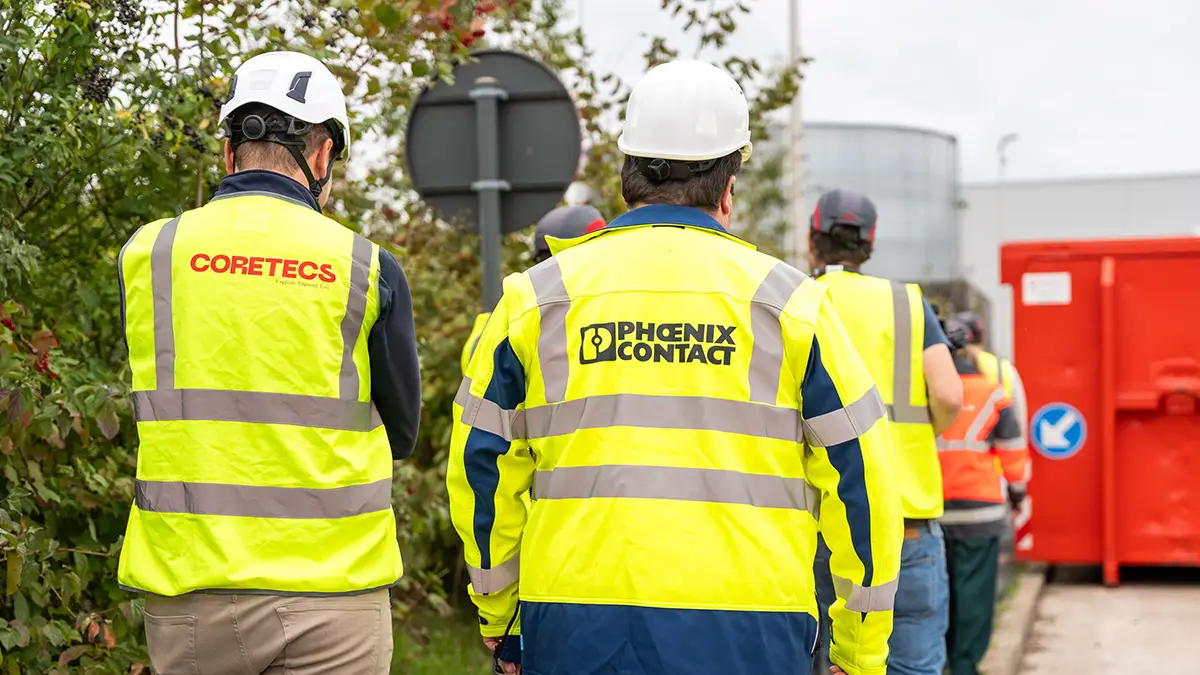
This project required the integration of multiple domains of expertise. Coretecs acted as the central engineering partner, connecting Veolia’s operational needs with the market knowledge of its subsidiary Flexcity and the technological capabilities of Phoenix Contact to deliver a single, cohesive system.
Wondering how everything fits together? To see this innovative project in action and hear directly from the partners who made it happen, watch our full video case study below.
We began by reviewing Veolia's existing energy study to thoroughly understand their energy consumers, sources, and how these communicate. This helped us to map the new components on their current infrastructure and determine what needed to be added or reworked.
“Our role as a technology-agnostic partner is to look at the entire ecosystem. We analyse the needs, map out the required architecture, and then, based on that, choose the right technology to bring it all together.”
As part of the analysis, our E&I team updated Veolia's electrical diagrams to integrate the new components and delivered a complete set of technical documentation. We included a cable list, IO list, network diagrams and single-line diagrams for the grid operator, and various suggested improvements for Veolia's current energy cabinets.
To meet Veolia's energy management needs, we implemented a smart control system featuring a Remote Terminal Unit (RTU). This custom system provides intelligent regulation of the solar power system's output and serves as the critical interface between Veolia's site and Fluvius, the grid operator. It allows Fluvius to remotely regulate solar production to prevent grid congestion, which ensures a balanced energy flow and full compliance with industry regulations as defined by Synergrid.
For the foundation of this control system, we used Phoenix Contact’s MINT system, based on PLCnext. During market research, it stood out because of its power, flexibility, and commitment to security. We implemented and customised MINT to fit Veolia’s specific needs, setting up all the necessary connections between the solar inverters, the BESS, and other site components.
“MINT is an open and modular system, so it’s ready for the future. New components and technologies can easily be integrated. It's also cybersecure by design and complies with regulations like NIS2, a non-negotiable requirement for critical infrastructure like energy.”
We integrated a one-megawatt Battery Energy Storage System (BESS) as the core of the site's new flexibility. Controlled by the smart management system and guided by Flexcity's market expertise, the BESS performs a dual function:
“Thanks to the battery, we can help make the electricity grid carbon-free in two ways. First, we don't have to shut down renewable energy when there's a surplus. Second, we can use that stored green energy at a time when there is no sun or wind, preventing the need to rely on grey energy. It's a double win for sustainability.”
By combining smart automation with our robust E&I design, we delivered a fully integrated MINT-based system where all components work in concert. Veolia now has complete control over its energy assets, allowing for efficient resource management and a greater contribution of green energy to the grid.
As Veolia continues to innovate and lead the way in ecological transformation, we will support them with various other initiatives across their sites. We're excited to see where this partnership will take us next!
Ready to take your Industry 4.0 initiatives to the next level? Contact us today and let's make it happen together.